Hatsune Miku - Future Sound

What is VOCALOID?
Vocaloid (stylized as VOCALOID) is a singing voice synthesizer software product. Its signal processing part was developed through a joint research project between Yamaha Corporation and the Music Technology Group at Pompeu Fabra University, Barcelona. The software was ultimately developed into the commercial product "Vocaloid" that was released in 2004. The software enables users to synthesize "singing" by typing in lyrics and melody and also "speech" by typing in the script of the required words. It uses synthesizing technology with specially recorded vocals of voice actors or singers. To create a song, the user must input the melody and lyrics. A piano roll type interface is used to input the melody and the lyrics can be entered on each note. The software can change the stress of the pronunciations, add effects such as vibrato, or change the dynamics and tone of the voice.
The software was originally only available in English and Japanese, but with the release of VOCALOID3 in October 2011, support for Spanish, Chinese, and Korean have been added. The software is intended for professional musicians as well as casual computer music users. Japanese musical groups such as Livetune of Toy's Factory and Supercell of Sony Music Entertainment Japan have released their songs featuring Vocaloid as vocals. Japanese record label Exit Tunes of Quake Inc. also have released compilation albums featuring Vocaloids. Currently, there are 6 versions of VOCALOID, the latest being VOCALOID6, which was released in 2022.
The Rising Popularity of Hatsune Miku
Vocaloid is popular because it democratized music production, enabling anyone to create complex songs without needing a human vocalist. This freedom, paired with a collaborative, open-source approach to characters like Hatsune Miku, fueled a massive, fan-driven global community of independent creators and listeners. Unlike traditional music acts, Vocaloid characters are essentially open-source mascots for singing voice synthesizers. Anyone can make a song using VOCALOID, even without prior experience in making music. This decentralized, crowdsourced ecosystem creates a boundless library of content and fosters a deeply loyal fanbase.
The software's explosive growth is heavily tied to virtual idols, most notably Hatsune Miku. These anthropomorphic avatars give a face to the software, allowing fans to connect with them via 3D-projected live concerts, massive video game franchises like Project SEKAI and Project DIVA, and global expos.
Vocal Synth Software
As Vocaloid rose in popularity, other vocal synthesizers were created, such as UTAU, a free software with a similar piano roll layout, and Synthesizer V, an advanced vocal synthesis and AI software developed by Dreamtonics. It allows users to tune hyper-realistic, human-sounding vocals. While Synthesizer V produces incredibly realistic vocals, Vocaloid fans and producers often value the distinct, robotic "instrumental" quality and unique tuning styles that defined the genre. Vocaloid has dominated the industry so much that people often call any vocal synthesizer "Vocaloid" as an umbrella term.
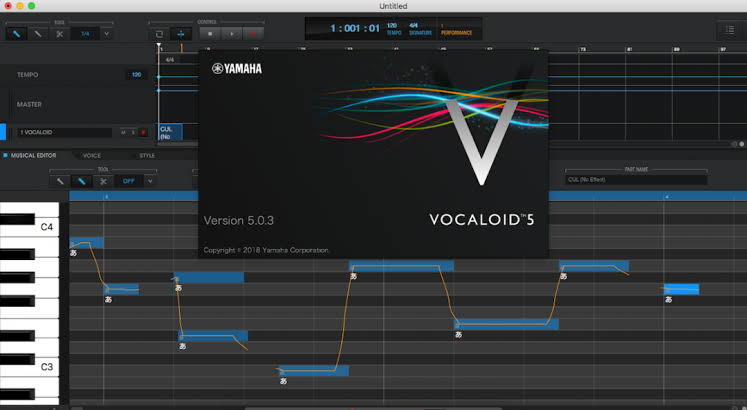
A cover of the first verse of 1000x1000 by Mili made by me on Hatsune Miku's VOCALOID4 free trial to emphasize how beginner-friendly the software is.